Interview with Sylvain Kubicki: Discovering the REGEN approach in Beckerich
This interview was originally published in Italian in QI Life, a monthly magazine of Quotidiano Immobiliare, and has been translated into English for our readers.
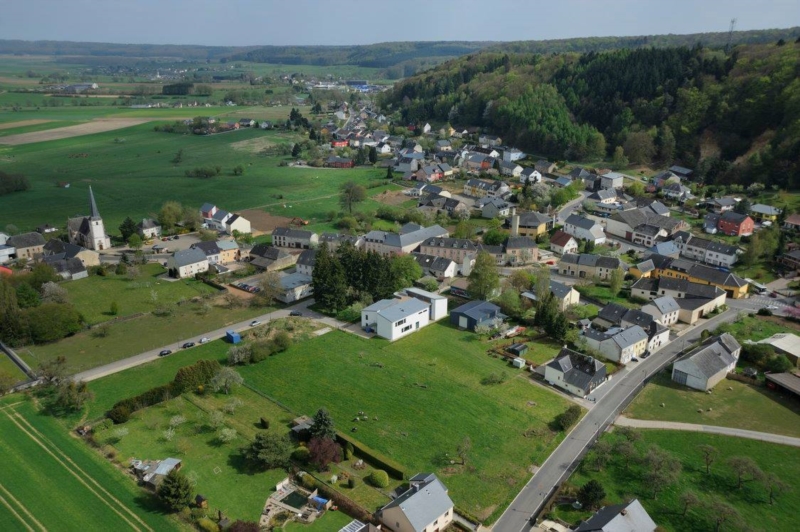
In the interview, Sylvain Kubicki, REGEN Project Coordinator and Group Leader for Sustainable Urban and Built Environment at the Luxembourg Institute of Science and Technology (LIST), discusses the REGEN approach through the experience of Beckerich – a small rural municipality in Luxembourg with a long-standing commitment to sustainability and community-led action.
The conversation explores how digital innovation, new governance models and citizen participation can support the green transition while preserving the identity and strengths of local communities.
Read the full interview below.
Insights from Europe: Beckerich
After exploring the Giambellino-Lorenteggio pilot in Milan, REGEN turns to Beckerich, a small rural municipality in Luxembourg that offers a different but complementary perspective on the green transition.
Here, REGEN is experimenting with how innovation, digital tools and citizen participation can support local administrations in addressing climate change while preserving the identity of their communities.
We discussed this with Sylvain Kubicki, REGEN Project Coordinator and Group Leader for Sustainable Urban and Built Environment at the Luxembourg Institute of Science and Technology (LIST).
1. Beckerich has long been recognised as a model of sustainability. Why was it the ideal place to test the REGEN approach?
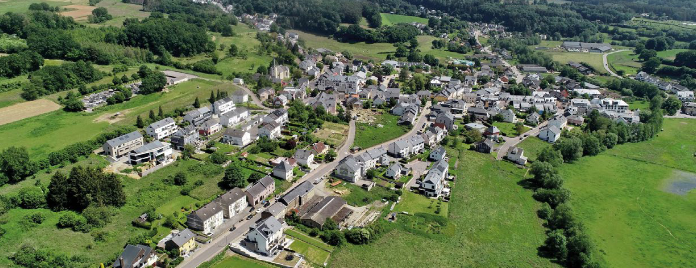
Beckerich has a truly unique history. For decades, this small municipality has been at the forefront of renewable energy, water resource management and community-led initiatives.
Long before sustainability became a public policy priority, citizens and the local administration were already experimenting with collective solutions such as biomass heating systems, energy cooperatives, bio-based materials and even a local currency.
Much of this journey is linked to the vision of former mayor Camille Gira, who promoted an ambitious environmental agenda many years ago.
When we were looking for a rural pilot for REGEN, we did not simply want to find a village with good intentions. We were looking for a place where the relationship of trust between citizens and the local administration was already strong, and where people were genuinely willing to experiment with new solutions.
This trust is fundamental to what we want to test with REGEN.
We are not simply installing sensors or developing dashboards. We are introducing new governance models to guide the transition, such as the concept of a Neighbourhood Regeneration Office, as well as new ways of involving citizens in decisions that directly affect their community.
There is also a symbolic aspect that I consider very important.
Beckerich demonstrates that ambitious climate action is not reserved for large cities with substantial budgets and dedicated sustainability departments. It shows that even a small rural community, with the right support and appropriate tools, can become a genuine laboratory for the green transition.
2. Much of the debate around climate innovation focuses on cities. Why is it equally important to invest in small municipalities and rural communities?
That’s true. When we talk about climate innovation, we immediately think of smart cities, major urban renovation projects, large-scale infrastructure or the renaturalisation of sealed urban spaces.
But if we look at the map of Europe, most municipalities are small communities. If we focus exclusively on cities, we leave out a huge part of the territory and population.
Rural and semi-rural areas also face specific challenges that are not immediately addressed by urban models.
Building typologies are different, as are mobility patterns, the distribution of services and, above all, the administrative and technical capacity required to manage large renovation or digitalisation programmes.
Local administrations are also often further removed from the central institutional levels that define and implement policies.
A metropolitan area may have dedicated departments for energy efficiency or digital innovation. A municipality such as Beckerich, by contrast, often relies on a few highly motivated people, sometimes even volunteers, to move these initiatives forward.
This is precisely why REGEN includes both an urban and a rural pilot.
We want to demonstrate that the tools and methodologies developed by the project, including digital twins, customised energy models, circularity assessment workflows and citizen engagement methodologies, can be adapted to very different contexts.
These are not simply scaled-down versions of solutions designed for cities. They are tools genuinely designed around the needs of smaller communities.
There is also an issue of equity.
The European Green Deal must work for everyone and everywhere. Otherwise, it risks losing credibility.
If rural communities perceive the transition as something imposed from outside, designed for cities and largely irrelevant to their reality, we lose enormous potential for participation and reinforce a divide between urban Europe and rural Europe that we cannot afford.
3. From your perspective, what are the main challenges that municipalities such as Beckerich face on the path towards climate neutrality?
There are several challenges, and they are closely interconnected.
The first concerns resources.
Small municipalities do not have the technical and administrative expertise available in large cities.
There are rarely dedicated staff responsible for energy, digital innovation or citizen engagement.
Therefore, when a European project such as REGEN introduces new tools and methodologies, it is essential to ensure that they do not represent an additional workload, but instead help strengthen skills that remain within the local community after the project ends.
The second concerns funding.
Access to European or national funding is often designed with organisations that have stronger administrative structures in mind.
Small municipalities may struggle to prepare the required technical documentation or secure the necessary co-financing, even when the project itself is strong.
The third concerns the characteristics of the building stock.
In rural areas, buildings are generally older, more dispersed and highly heterogeneous.
Implementing interventions at scale is more complex than in urban environments, where entire blocks may contain similar buildings.
Every farm building or historic property represents a case in its own right.
In addition, information about buildings is often fragmented between different authorities, making it difficult to obtain a complete overview of the existing building stock and develop effective regeneration strategies.
Mobility is another challenge.
In low-density territories, decarbonising transport is much more difficult than in a compact urban centre.
There is also another challenge that I would describe as preserving identity.
Beckerich does not want to become a generic “smart village” similar to many others experimenting with new technologies.
There is a strong desire to preserve the character of the place, its landscape and the social fabric that makes the municipality unique, while continuing to innovate.
For this reason, every technological, urban or architectural intervention must be discussed and designed together with citizens.
Finally, maintaining community engagement over time is more difficult than it might seem.
It is relatively easy to generate enthusiasm when a project starts. Maintaining that engagement for several years, particularly in an ageing population that is not always familiar with digital tools, requires patience and continuous commitment.
4. REGEN combines technological innovation and citizen participation. Why is it essential to advance both aspects together to achieve real and lasting change?
Because neither of the two really works without the other.
This is the main lesson we want to demonstrate through REGEN.
If technologies such as sensors, digital platforms or energy simulation tools are introduced without genuine citizen engagement, there is a risk of developing solutions that are useful to experts but rarely used by citizens, or even rejected because they are perceived as being imposed from above.
We have seen many smart city projects produce sophisticated dashboards that nobody consulted after the inauguration.
Technology without a genuine sense of ownership does not generate lasting change. It simply produces expensive tools.
On the other hand, citizen participation also has limitations without reliable data and appropriate tools.
Good intentions and public meetings are important, but at a certain point we need concrete information: energy performance data, simulations, clear visualisations of lifecycle impacts and trade-offs between different solutions.
This is what turns discussion into operational decision-making.
Otherwise, participation risks remaining purely symbolic.
This is why REGEN has been built around the concept of Living Labs and Neighbourhood Regeneration Offices: physical or hybrid spaces where technology and participation meet on an equal footing.
Citizens co-design solutions together with researchers, technology experts and local administrations. They test ideas, provide feedback and see their contributions translated into subsequent versions of tools and proposals.
The objective is not to show innovation to citizens, but to build innovation together with them.
There is also a democratic reason that is particularly important to me, especially given my background as an architect.
Decisions concerning the renovation of a street, the design of a public space or the introduction of new energy infrastructure directly affect people’s daily lives.
Involving them from the earliest stages is not simply good practice. It is what makes solutions legitimate, collectively supported and, over time, genuinely adopted and maintained.
Social acceptance is not an accessory to the technical solution. In our experience, it is often the decisive factor in ensuring that an innovation continues to create value beyond the pilot phase.
5. Finally, if there were one lesson that large cities could learn from municipalities such as Beckerich, what would it be?
If I had to choose just one, I would say it concerns proximity and trust as governance tools.
In a small municipality such as Beckerich, the mayor, municipal staff and citizens often know each other personally.
This proximity makes it easier to explain decisions, respond directly to questions and build a relationship of trust.
Of course, a large city cannot reproduce this model at metropolitan scale, but it can recreate it at neighbourhood level.
This is precisely what we are experimenting with in the Giambellino-Lorenteggio pilot in Milan: bringing governance and decision-making down to a scale where relationships and trust can genuinely develop.
I would also add another lesson: long-term consistency.
Beckerich did not become a sustainability reference point thanks to a single flagship project, but through decades of continuous commitment, carried forward by different administrations and generations of local leaders who shared the ambition of building a more sustainable future.
This political continuity is something that large cities, with more complex administrative structures and more frequent changes in government, sometimes struggle to maintain.
Finally, Beckerich also teaches us the value of simplicity and alignment with the local context.
Solutions developed in rural areas generally emerge from concrete community needs rather than from a desire to adopt the most innovative technology available at a given moment.
This is a valuable lesson for cities as well, where there can sometimes be a tendency to import “smart” solutions considered universal without asking whether they genuinely respond to local problems.
If large cities adopted even part of this habit of asking:
“Will this solution really improve the life of our community?”
before implementing every intervention, we would probably see transitions that are more robust, more widely supported and more lasting.
REGEN is co-funded by the European Union.
The views expressed are solely those of the authors and do not necessarily reflect those of the European Union or CINEA. Neither the European Union nor the granting authority can be held responsible for the content.
No responses yet