From 15 to 17 July 2026, the Spanish National Sociology Congress, organised by the Spanish Federation of Sociology (FES), brought together the Spanish research and sociology community in Bilbao, Basque Country.
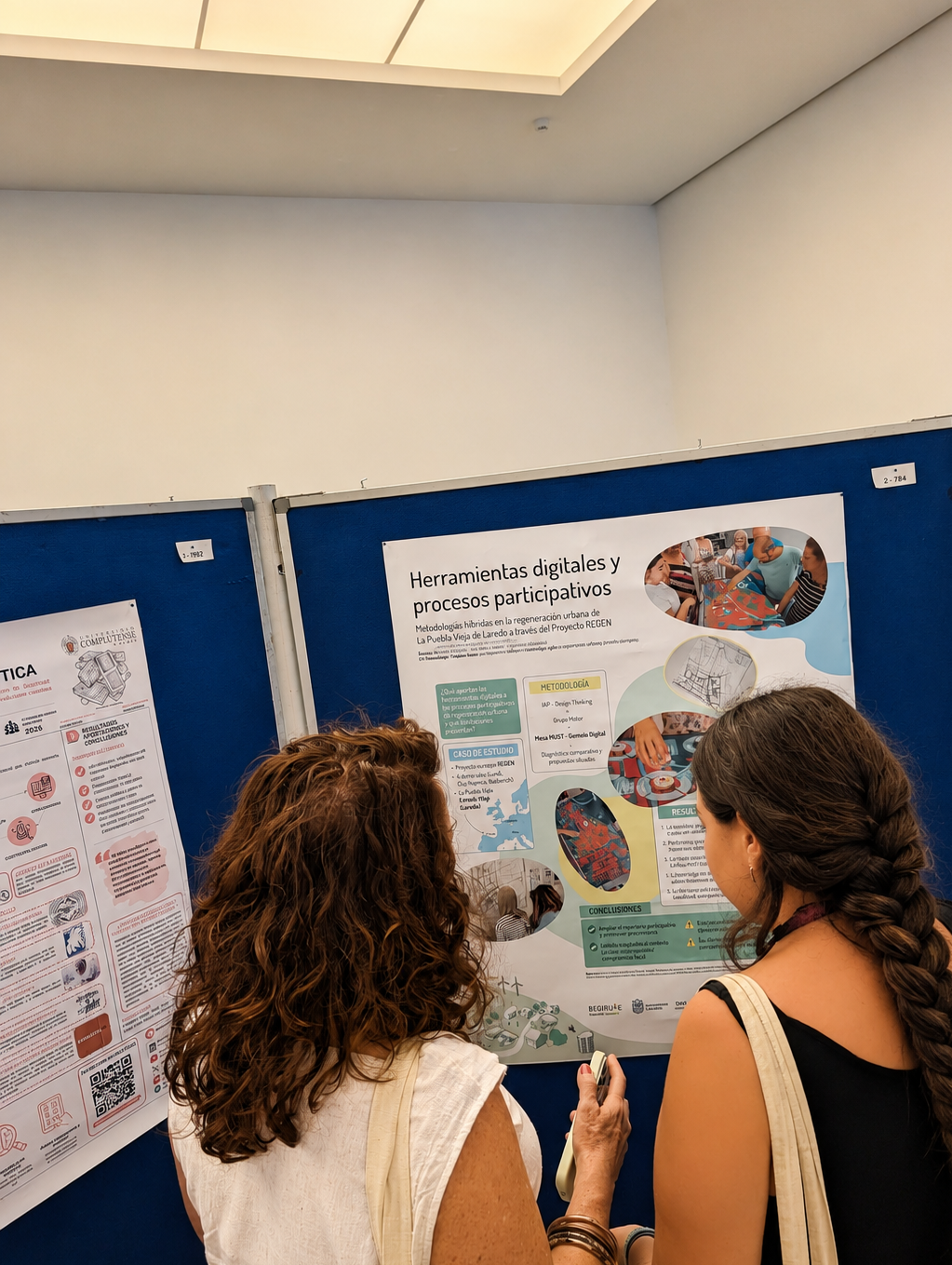
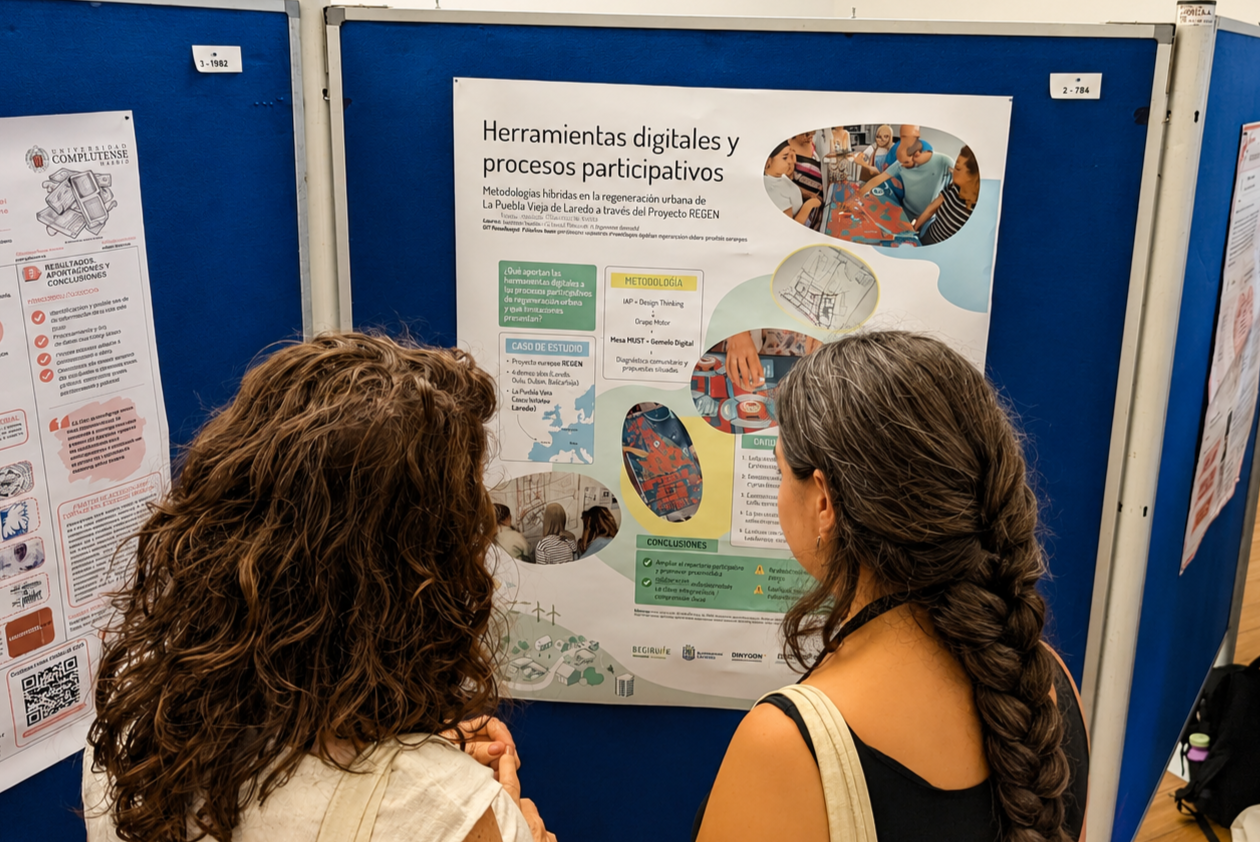
REGEN participated in the three-day congress through a research poster presentation and networking activities during the official poster session, focusing on one of the project’s central themes: how participatory methodologies and social innovation can support socio-ecological regeneration and community engagement.
With approximately 1,600 attendees, the event offered REGEN an opportunity to introduce its approach to a broad academic and professional audience and to exchange perspectives on the challenges of collaborative regeneration.
Putting participation at the centre of regeneration
The REGEN poster presented the project’s participatory framework, highlighting the methodologies used to engage stakeholders, support collaborative design and involve communities in regeneration processes.
Discussions during the poster session explored several aspects of the REGEN approach, including:
- Participatory and co-creation methodologies
- Stakeholder engagement and citizen participation
- Experiences from different REGEN demonstration sites
- The role of technological innovation in supporting socio-ecological regeneration
- How participatory processes can contribute to the design and implementation of local interventions
Rather than looking at regeneration only from a technical perspective, the discussions highlighted the importance of understanding local needs and involving the people and organisations connected to a territory.
Connecting research, practice and real-world regeneration
The REGEN poster attracted considerable interest during the dedicated session, sparking discussions with researchers, academics, practitioners and other stakeholders about the project’s participatory methodologies and their application across different territorial contexts.
Conversations explored the practical challenges and opportunities of stakeholder engagement, co-creation and collaborative regeneration, as well as the importance of interdisciplinary approaches when addressing complex socio-ecological challenges.
The exchange also provided valuable perspectives on the transferability of REGEN’s approach and led to several professional contacts for future knowledge exchange, collaboration and dissemination of the project’s methodologies.
An opportunity to strengthen REGEN’s approach
Participation in the Spanish National Sociology Congress provided valuable external perspectives on REGEN’s methodological framework.
The strong interest in participatory methodologies and socio-ecological regeneration reinforced the relevance of the project’s approach within the academic and professional community. It also highlighted the importance of communicating practical outcomes alongside research processes.
For REGEN, the congress therefore served not only as an opportunity to present its work, but also as a space to listen, exchange experiences and identify new opportunities to share and further develop its methodologies.
Continuing the conversation
The discussions in Bilbao demonstrate the value of creating spaces where research, practice and local experience can meet.
By bringing participatory methodologies into dialogue with researchers and practitioners from the sociology and wider sustainability communities, REGEN continues to explore how collaboration, social innovation and technological approaches can contribute to more inclusive and sustainable regeneration.
The exchange continues across REGEN’s demonstration sites and wider network.
No responses yet