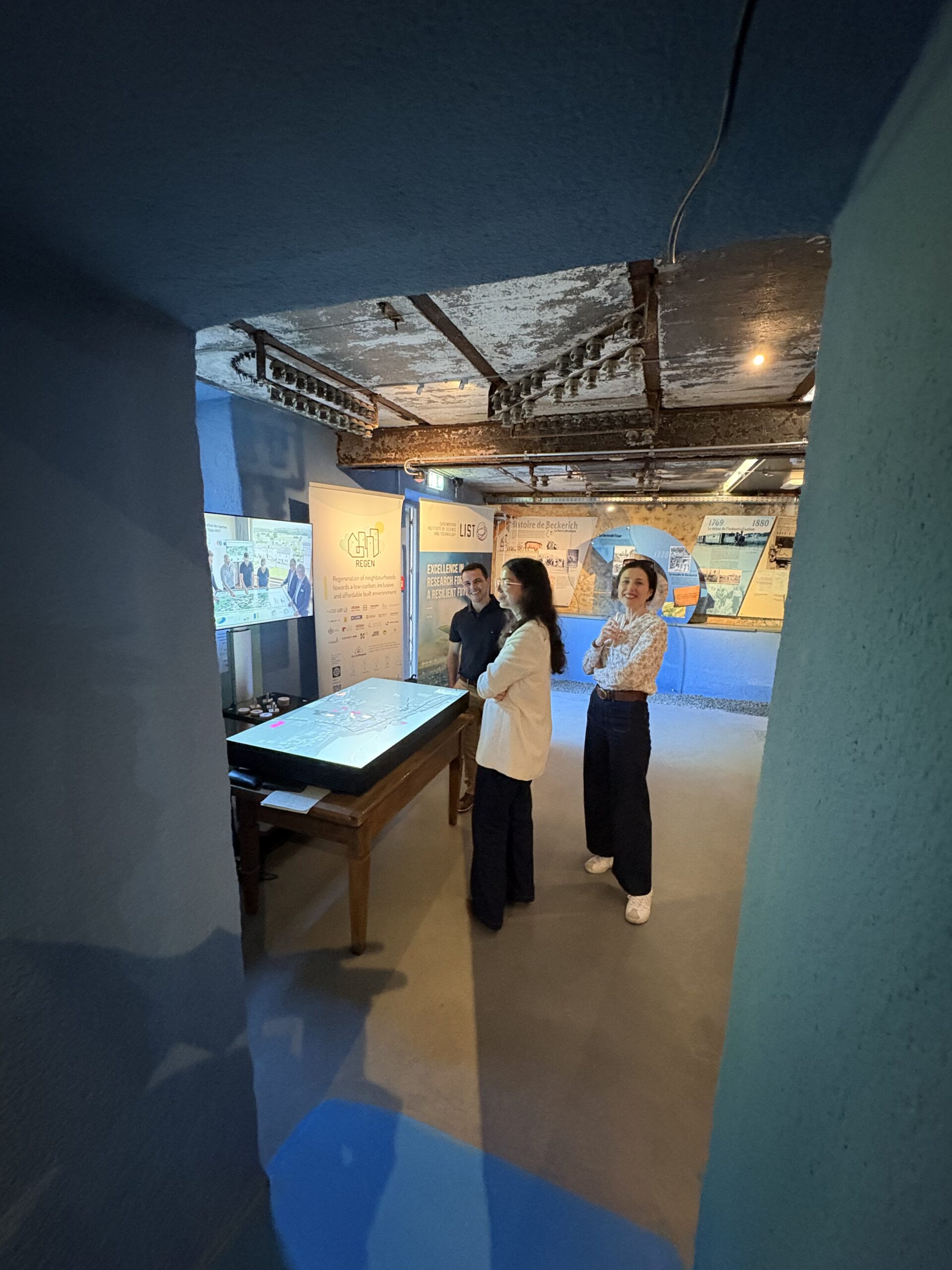
On Friday, 22 May 2026, the Municipality of Beckerich hosted a participatory workshop centred on the MUST Table (Multi-Scale Urban Sustainability Tool), an innovative tool developed as part of a research project led by the Luxembourg Institute of Science and Technology (LIST).
Key topics addressed
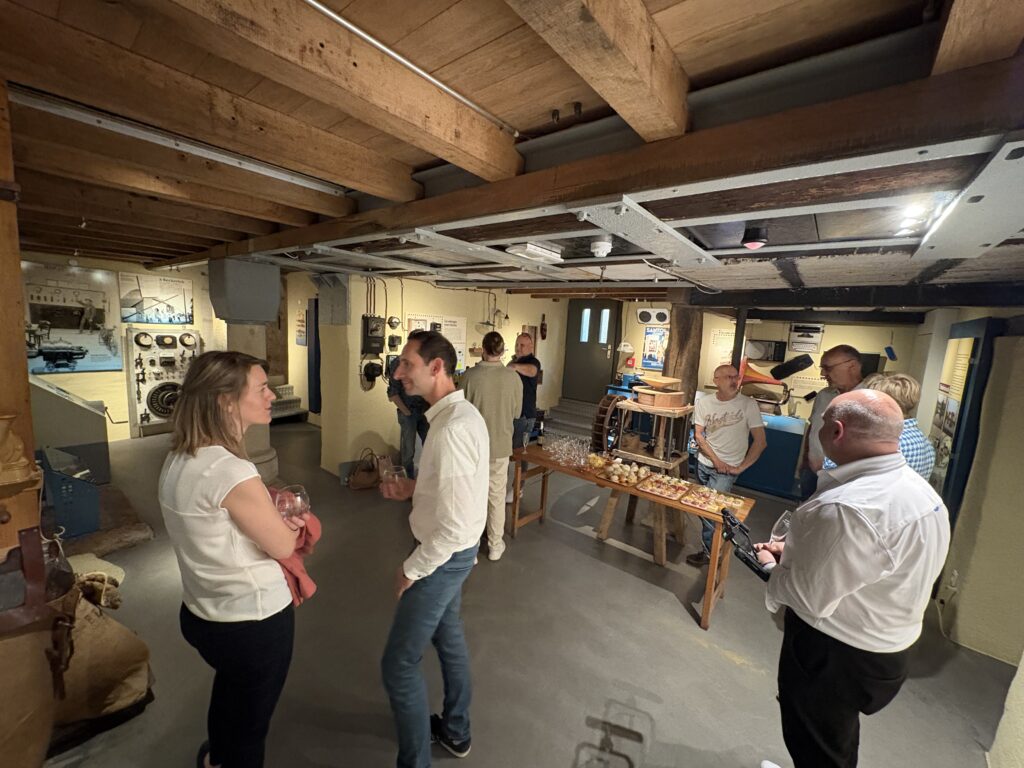
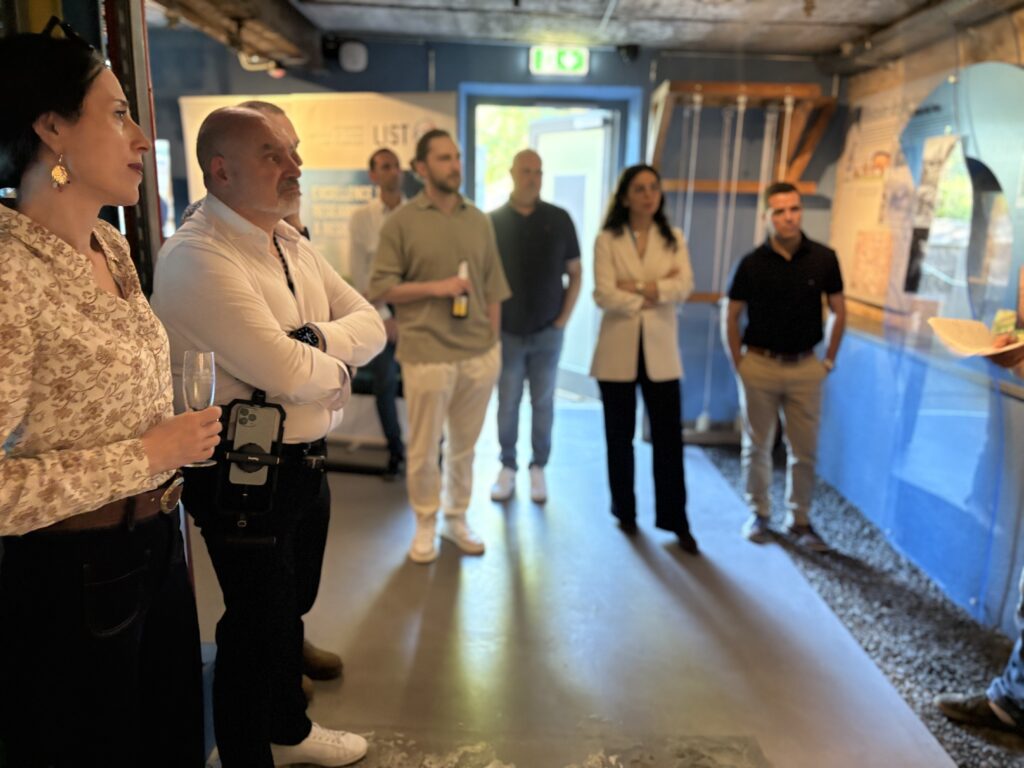
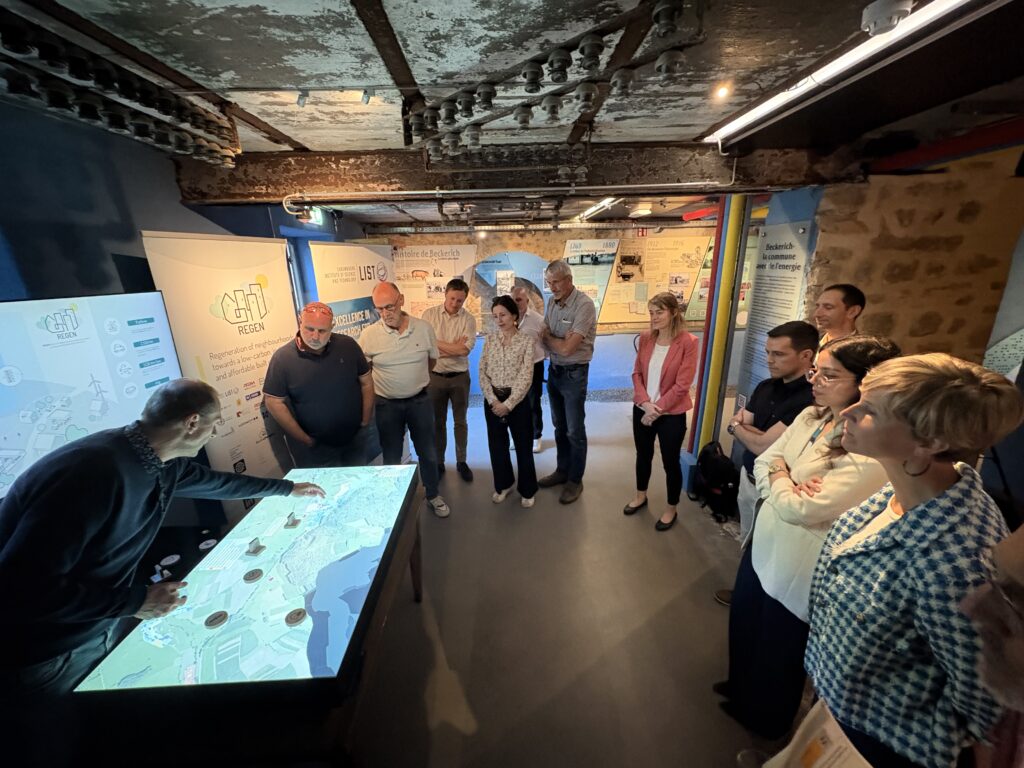
The evening began with a guided tour of the Beckerich Energy Museum and Mill, led by Romuald Collard, Cultural Coordinator at Kulturmillen. Participants then attended a presentation of the MUST Table by Nico Mack from LIST and Maria Candelas from the Municipality of Beckerich.
Using an interactive map of the municipality, participants explored a wide range of data related to buildings, green spaces, land-use planning, and the district heating network. The tool enables users to visualise building energy consumption and CO₂ emissions, while also simulating different energy renovation scenarios and assessing their potential benefits.
Impacts and outcomes
The discussions highlighted the importance of making data more accessible to the general public through tangible indicators, such as the number of trees required to offset CO₂ emissions or the equivalent distance travelled by car or by plane. Participants also stressed the need to include more economic information, such as renovation costs, potential savings, and payback periods, to help citizens better understand the financial benefits of energy renovation.
Several energy transition solutions were discussed, including building insulation, heat pumps, photovoltaic panels, and connection to the district heating network. The development of local energy communities, enabling the sharing and valorisation of locally produced energy, also generated considerable interest.
The MUST Table was further recognised as a valuable tool for research, spatial planning, and decision-making. It has the potential to support more informed energy renovation strategies at both municipal and regional levels while facilitating citizen engagement in renovation projects.
The discussions also addressed broader topics such as spatial planning, local services, and citizen participation. Participants emphasised the importance of continuing participatory initiatives to collectively shape the future of the municipality. Among the ideas discussed was the creation of a local market in the church square to promote short supply chains, strengthen community ties, and enhance the attractiveness of the village centre.
At the end of the workshop, participants were invited to complete an evaluation questionnaire to provide feedback on the usefulness of the tool, its educational value, and possible improvements for the next stages of the project.
Looking beyond the workshop
The MUST Table will remain publicly accessible until the end of September 2026. Citizens are encouraged to visit, explore its various features, and learn more about the opportunities it offers in the fields of energy renovation, territorial development, and the ecological transition. A user guide is available next to the table to help visitors make the most of the experience.
Through this initiative, the Municipality of Beckerich continues its commitment to involving residents, experts, and local stakeholders in addressing the energy and territorial challenges of the future. By fostering collaboration and dialogue, the municipality aims to build an increasingly sustainable, resilient, and attractive community by 2050.
No responses yet