
The REGEN team has completed the first AFUR-based indicator for the Groningen Replication Scenario: Change in land coverage and its expected impacts on urban biodiversity.
To do that, the soil types have been characterized depending on their nature. Each type of soil has both a performance related to its capacity to absorb water (characterised by its Soil Permeability Index, SPI) as well as its ability to support biodiversity (characterised by its Soil Biodiversity Index, SBI). With this information it is then possible to calculate the overall SPI and SBI for the site.
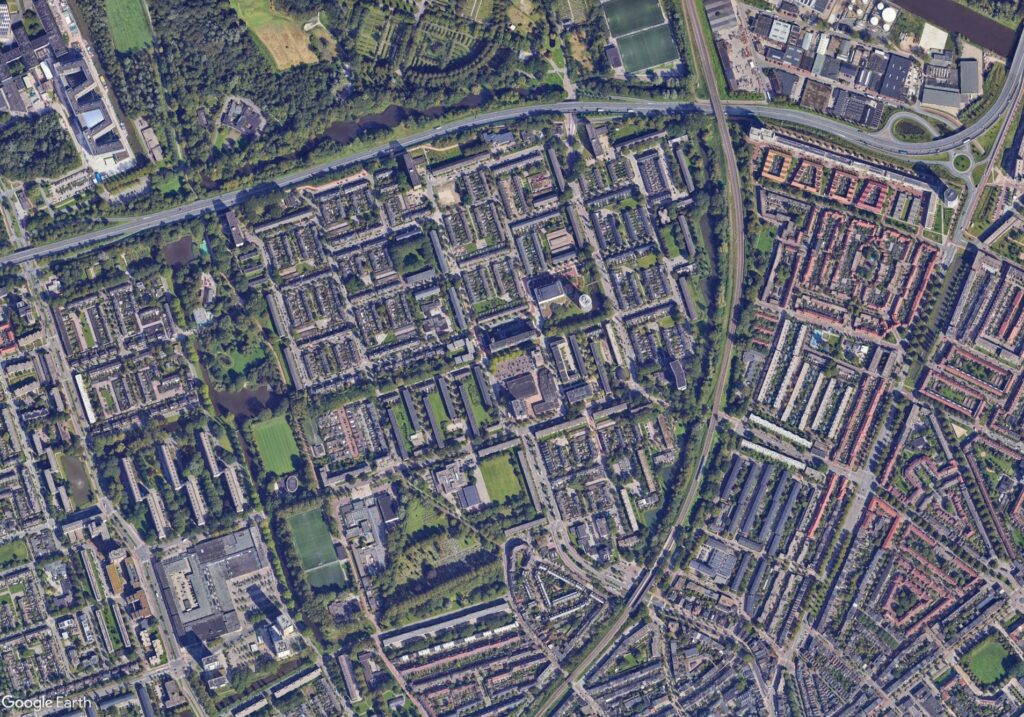
As seen on the following results, the site has a permeability index close to the AFUR regeneration objective, which improves the site’s resilience towards flooding, as well as a great capacity to foster biodiversity and habitat connectivity.
The project presents the overall results
| Indicator | Site’s Result | Minimum Threshold | Regeneration Objective |
| SPI | 0.49 | 0.35 | 0.5 |
| SBI | 0.44 | 0.35 | 0.5 |
This indicator is one of the many ways AFUR helps cities and developers quantify the real environmental value of regeneration projects, before, during and after implementation.
If your municipality or development project wants to…
- Understand expected impacts
- Compare design scenarios
- Support decision-making with evidence
…then AFUR can help you do it-free of charge!
Join REGEN as one of our 10 Replication Scenarios! More information here.
No responses yet