As part of the project, the Municipality of Beckerich and Kulturmillen, in collaboration with three others REGEN partners ( LISER, LIST, TIL) is advancing its efforts to support the transition toward more sustainable and resilient local development models.
Through a series of participatory workshops, the initiative explores practical pathways for municipalities to address environmental, energy, and societal challenges.
The fourth workshop in this series will take place on 22 May 2026 in Beckerich, continuing the collective reflection on the future of the municipality.
A collaborative approach to territorial development
This event is built on a co-creation approach, bringing together academic, professional, institutional, and civic stakeholders. By combining diverse perspectives and expertise, the initiative aims to develop a shared and integrated vision of territorial transformation.
While grounded in the specific context of Beckerich, this approach is designed to be transferable and to inspire other municipalities seeking to accelerate their sustainability transitions.
The workshop format is intentionally limited in size to ensure high-quality interactions and active participation.
An innovative tool for urban planning: the MUST Table
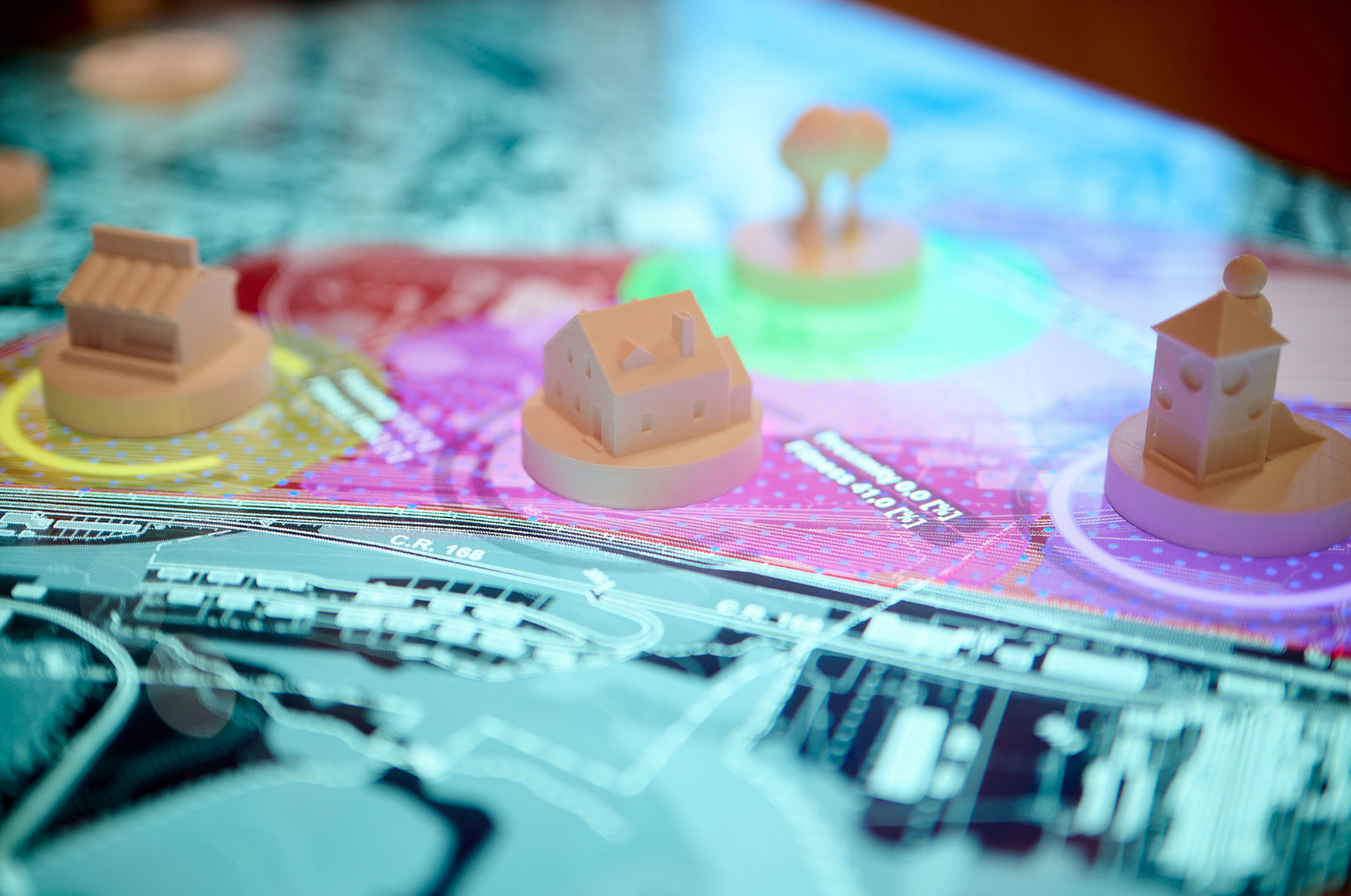
At the core of this workshop lies an innovative tool developed within the project: Managing Urban Spaces Together (MUST). This interactive and tangible table, co-developed by LIST, supports collaborative urban planning by bridging digital data with physical interaction.
The tool allows users to explore, on a building-by-building basis:
- current energy consumption,
- CO₂ emissions,
- and the potential impact of different renovation scenarios.
Four renovation scenarios are proposed, enabling users to assess possible energy savings and identify more sustainable pathways. By making complex data accessible and interactive, the MUST Table fosters shared understanding and informed decision-making.
A structured reading of the territory
The workshop is based on a comprehensive analysis of the local territory, structured around several key dimensions:
- Building typologies: identification and analysis of different types of buildings (single-family homes, multi-family housing, public buildings, etc.), including their construction periods and specific characteristics.
- Renovation potential: assessment of scenarios integrating circular economy principles, such as material composition and reuse potential.
- Local services and amenities: mapping of existing businesses and services to identify needs, development opportunities, and their alignment with designated planning zones (residential, mixed-use, etc.) as defined in local planning instruments.
This multi-layered analysis helps to better understand the interactions between the built environment, local uses, and development dynamics, ultimately supporting more effective and sustainable planning strategies.
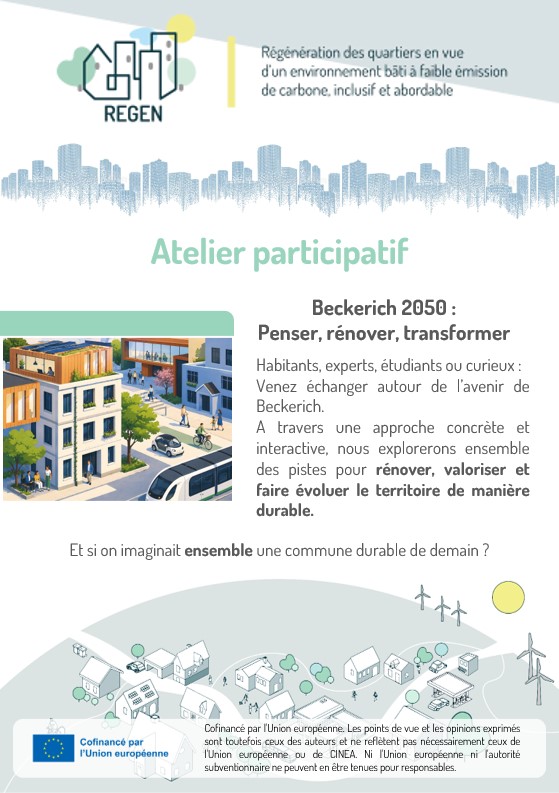
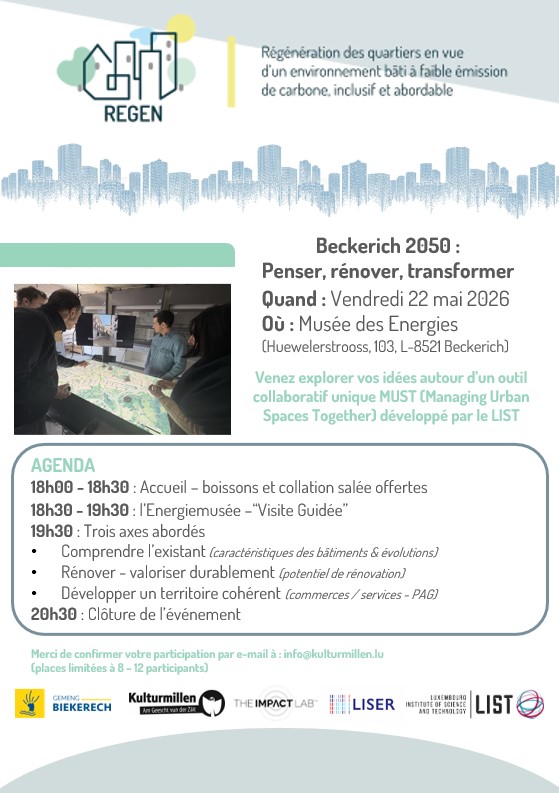
More information about the workshop is provided below in the local language:
No responses yet